House Clearance Shortlands - Health & Safety Policy
This health and safety policy sets out the principles and procedures that govern safe operation for our house clearance and rubbish removal activities. The aim is to protect staff, contractors, clients and the public while providing efficient waste clearance, rubbish collection and property clearance services. This document provides an overview of responsibilities, risk management, training and emergency procedures tailored to a rubbish company service area without referencing specific local legalities. It should be read in conjunction with operational risk assessments and job-specific method statements.Policy statement and scope
Our organisation is committed to maintaining a safe working environment for all employees and those affected by our work. House clearance, rubbish removal and other waste clearance operations will be planned and executed to reduce hazards and prevent injury. The policy applies to all tasks including domestic clearances, estate clearouts, bulky waste removal and on-site sorting. Everyone engaged in waste and clearance services is expected to follow safe systems of work and contribute to continuous improvement.
Responsibilities
Management holds ultimate responsibility for health and safety and will ensure adequate resources are provided for training, PPE and vehicle maintenance. Supervisors are responsible for implementing safe procedures and conducting pre-job briefings. Employees must follow instructions, report hazards, and use supplied safety equipment. Contractors and sub-contractors must demonstrate satisfactory health and safety arrangements before commencing work. The organisation will monitor compliance through inspections and recorded checks.Risk assessment and planning — All clearances and rubbish collection jobs must be subject to a written or site-specific risk assessment prior to commencement. Assessments will identify manual handling hazards, slip and trip risks, sharps, asbestos suspicion, hazardous liquids and environmental constraints. Control measures include segregation of waste streams, use of appropriate lifting aids, traffic management for vehicle access and exclusion zones during loading. A method statement describing step-by-step controls must be available to onsite teams.
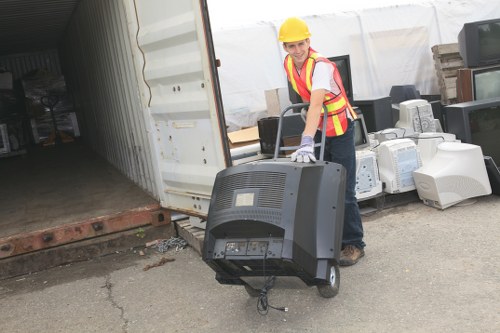 Training, competence and supervision — Staff will receive induction training covering manual handling, PPE use, vehicle loading, safe use of tools and sharps procedures. Refresher training is provided periodically and when new risks are introduced. Competence will be assessed by supervisors and via observed safe work tasks. Young or inexperienced workers will be supervised until competency is demonstrated. Records of training and competence checks will be maintained.
Personal protective equipment (PPE) and vehicles — PPE is provided where risks cannot be fully eliminated. Required items may include gloves, steel-toe footwear, high-visibility clothing, eye protection and respiratory protection when dust or fumes are present. Vehicles and plant used for clearances and rubbish removal will be maintained to a safe standard with routine checks for brakes, lights, restraints and tail-lifts. Load security is the responsibility of the operator and supervised staff.
Manual handling controls are central to safe house clearance work. Use mechanical aids where possible and apply safe lifting techniques. When moving bulky items, adopt a team lift procedure and plan the route free of obstructions. The following safe practice checklist is embedded into daily operations and toolbox talks:
- Carry out a dynamic risk assessment on arrival.
- Identify and isolate hazardous materials or suspected asbestos.
- Ensure traffic and pedestrian exclusion where loading takes place.
- Segregate recyclable, hazardous and general waste for correct disposal.
 Hazardous waste and contamination — Items suspected to contain hazardous substances (e.g., asbestos, solvents, pesticides, batteries) must be reported and handled only by trained personnel. Contaminated materials will be segregated and contained to prevent spread. If contamination affects a cleared property, appropriate decontamination or specialist disposal services will be engaged. The organisation will maintain a list of authorised waste carriers and disposal routes consistent with environmental protection best practice.
Incidents, first aid and emergency response
All incidents, near misses and injuries must be reported promptly and recorded. First aid boxes and trained first aiders will be available on significant operations. Emergency procedures include securing the area, contacting emergency services if required, and preserving evidence for investigation. Lessons learned from incidents will feed back into training, risk assessments and the continuous improvement cycle.Monitoring, review and continuous improvement
Health and safety performance will be monitored through inspections, vehicle checks, training audits and incident analysis. This policy will be reviewed annually or sooner if significant changes in operations, legislation or incidents occur. The organisation encourages reporting of hazards and suggestions for improvement. Senior management will ensure sufficient resources are allocated to implement corrective actions identified through audits and reviews.Conclusion — By following the arrangements set out in this policy, staff and contractors contribute to a safer working environment while delivering effective house clearance and rubbish removal services across our service area. Maintaining vigilance, following risk assessments and using correct procedures ensures the wellbeing of people and protection of property and the environment.